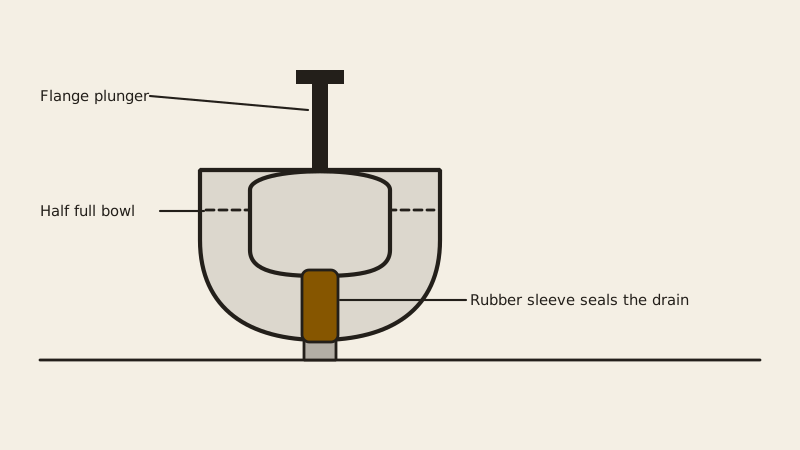
Sequence matters. Stop the inflow first, either at the wall valve or by pressing the tank flapper down. Next comes the flange plunger, whose cup hides a fold-out rubber sleeve. Press it snugly into the outlet and work it in firm, even strokes. Many clogs yield within a dozen pushes. Failing that, reach for a closet auger. The clogged toilet page says when to hand it over.
What if the bowl is already rising?
No second flush. Pushing the flapper onto its seat, or turning the wall valve fully clockwise, ends the inflow. Otherwise the tank keeps feeding a bowl that cannot drain. Lay towels around the base, mop what has spilled and keep a bucket within reach.
A level near the rim calls for bailing a few cups into the bucket before you plunge. A level that is sinking slowly on its own deserves ten minutes of patience, because a partial blockage sometimes drains.
Tell children and anyone else who might flush to stay out of the bathroom until you finish.
Which plunger works, and how should it be used?
Choose a flange plunger, sometimes called a toilet plunger: a cup with an extra rubber sleeve below it that fits the drain. The flat-cup kind sold for sinks will not seal here. Push the sleeve into the opening, ease the cup down to drive out air, then pump with the seal intact.
Plungers push water, not air, so the bowl should be about half full. Top it up from a bucket if it is low.
- Seat the plunger and press down gently first, so the cup does not blast water back at you.
- Pump 15 to 20 times without lifting the cup.
- End with a hard pull that snaps the plunger free. The surge often shakes the clog loose.
- Water draining? Flush once to test. Water rising? Do not flush, and go again.
Allow three or four rounds before changing tools. Paper and waste usually shift under pressure, and plunging does the porcelain no harm.
Does hot water and dish soap work?
On a soft paper clog it can, and it costs next to nothing. Add a generous dollop of dish soap, follow with a pail of hot tap water poured from waist height, then leave it for 10 to 20 minutes before plunging. Water at a full boil can crack porcelain, so use tap-hot only.
Soap makes the pipe wall slippery and warmth loosens the mass. Keep this away from any chemical product. A bowl with drain chemicals in it is one you will then be plunging, and splashback of a corrosive mix is the risk.
As a rule, leave chemical openers out of toilets. They pool in a full bowl, can damage certain pipes and finishes, and put at risk whoever opens the line later.
Why do toilets block repeatedly?
A block that keeps returning has a cause beyond the last flush. Candidates include a weak low-flow flush, too much paper, wipes, a partly blocked vent, a cracked or root-invaded sewer line, or a poorly seated toilet. If it recurs, get the line inspected rather than repeating the same repair.
What points to a blockage deeper in the drain system?
When other fixtures are affected, the toilet is not the origin. Watch for a tub or shower that gurgles or backs up on each flush, a sink draining slowly at the same moment, or sewage rising in a floor drain or the lowest fixture. Any of these says the main line is part or fully blocked, and no plunger will reach it.
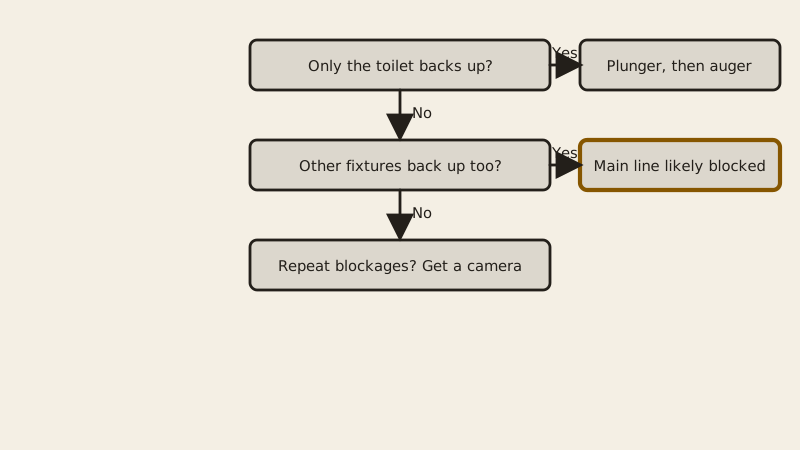
Ownership splits at the property boundary. The Cucamonga Valley Water District's FAQ makes the owner answerable for the sewer line running to the house, plus the cleanout and back-water valve. A blockage out in the street main falls on the district, and the district says it handles sewer calls on an emergency response timeline.
A camera can reveal roots, a low spot or a collapse in an older line, which makes it a smarter next move than more plunging. See the inspection cost page for what that visit costs, and the slow sink guide when only a drain is slow.
What does a closet auger add?
After several failed plunging rounds, bring out a closet auger, which is a compact flexible cable running inside a curved guard. Feed the cable into the outlet and crank the handle so it travels through the trap, snagging or breaking up the obstruction. That curved guard is what keeps the porcelain from scratching.
Advance the cable gently and never force it against resistance. When the clog gives or the cable runs free, pull it out and test with water. Disinfect the auger before it goes back in storage.
Stop if the cable meets something solid that refuses to move. A toy, a hairbrush or a wad of wipes can wedge in the trap and require lifting the toilet, which is plumber's work. Wipes marked flushable often fail to break down, and they are a common cause of blocked toilets and drains.
At what point do I give up and phone a plumber?
Phone after both plunger and auger fail, when the toilet blocks again within days, when several fixtures back up, when sewage appears anywhere in the house, or when you suspect a foreign object. Overflowing sewage is a health hazard, so keep people and pets clear and wear gloves for anything you must touch.
Our job is the booking; the work itself and a price stated beforehand come from a local plumber. The quote form opens the request. A toilet that overflows without letting up is a case for the emergency plumber page. Typical unclogging prices are on the cost page, and the home page explains the rest.
Common questions
How soon can I expect the bowl to drain?
A plunger normally clears an ordinary clog in minutes, and an auger takes a bit longer. If neither works, a plumber visit runs longer because the toilet may have to be lifted or a camera needs to be fed down the drain. Reserve a morning or afternoon for a booked visit.
What should I clarify before saying yes?
Ask what the price includes, whether a call-out fee is charged even if the clog clears, whether camera work is part of it, how floors get protected, and what changes if the toilet must be lifted. Have it on paper before anything starts.
Is staying home necessary?
Yes, or arrange for another adult. They open the door, describe what happened and approve the price. Move rugs and personal items out of the bathroom, and keep children and pets well away from the work, particularly if sewage is involved. That keeps everyone safe.
Can I pour a chemical cleaner down the toilet?
We advise against them. The product can sit in a full bowl doing nothing, harm some pipes and surfaces, and splash on you or the plumber when the toilet is plunged or opened later. Already used one? Say so before work begins.
Updated