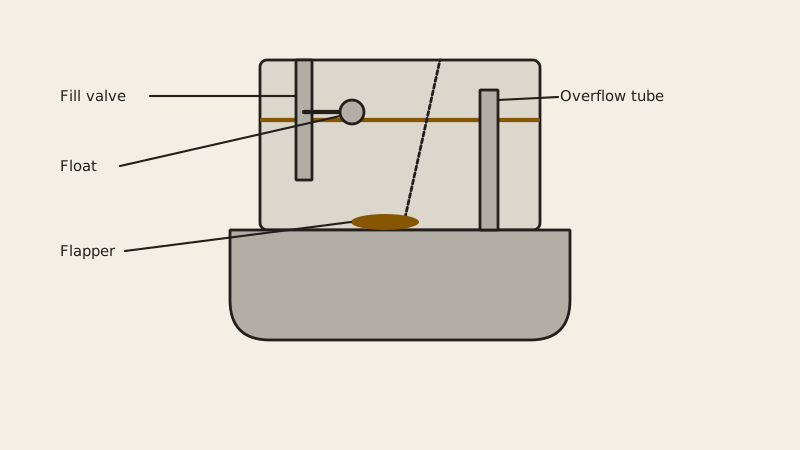
Lift the lid, press the handle once, and watch the tank for a minute. Seepage around the rubber flap along the tank floor says the flapper is spent. Water spilling down the open center pipe means the refill assembly or its float is off. Neither is a big repair. The sections below sort the cases, and the main toilet repair page explains which faults a local plumber can take on.
Which part inside the tank has gone bad?
Three components matter in there. A rubber stopper called the flapper plugs the outlet. A tall post to one side, the refill assembly, feeds fresh water. Attached to it, a float tells it when enough is enough. Hissing without a flush implicates the assembly. Silent seepage toward the bowl is the flapper's signature. Overflow down the center pipe implicates float height.
Dye settles it. A cheap diagnostic: put a few drops of food dye in the tank, do not flush, and wait ten minutes. Dyed water in the bowl afterward is proof of a flapper leak. The test is lifted from EPA WaterSense guidance for Fix a Leak Week, which adds that flappers deserve a periodic check and a swap every five years or sooner.
| Clue | Suspect |
|---|---|
| Tank tops up briefly every few minutes | Flapper seal |
| Steady hiss, never shuts off | Fill valve or float |
| Spill-over down the center pipe | Float set too high |
| Handle needs a jiggle to stop the flow | Chain length |
| Slow to stop after a flush | Aging valve seal |
Why does a toilet refill by itself with nobody near it?
A toilet that coughs up a refill every so often is leaking from tank to bowl so slowly that nothing seems wrong. The bowl loses a thread of water, the float drops a hair, and the valve opens. Folks call this a ghost flush. It is the same fault as a nonstop run, only caught earlier in its life.
Local water adds to it. The Cucamonga Valley Water District's FAQ describes its supply as moderately hard to hard, and a crust of minerals around the seat can stop rubber from lying flat. A damp cloth across the seat sometimes buys a few weeks. A flapper that has turned soft, curled or sticky is finished and needs replacing.
For a nonstop run, look at the chain next. Too short, and it props the flapper ajar. Too long, and a loop can slip under the flapper edge. The target is a little play, roughly the width of a thumbnail, once the flapper is down.
How do I stop the running, one step at a time?
Shut the supply valve low on the wall with a clockwise twist, flush the tank empty, then try remedies cheapest first: chain, seat, flapper, float, refill assembly. Every stage takes minutes. Hardware stores stock universal parts for common tanks, so carry the old flapper along to match its size and shape.
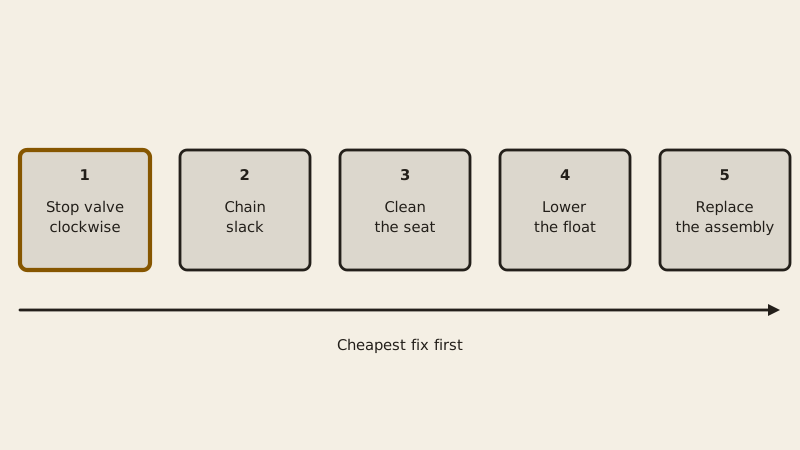
- Turn the stop valve clockwise until it halts, then flush.
- Untangle the chain and leave a thumbnail of slack.
- Rub the ring where the flapper lands, using a damp rag.
- Soft or warped rubber? Unhook the flapper from its side pegs and clip a matching one on.
- Reopen the valve. The water line should stop about an inch beneath the pipe's top edge.
- Sitting higher? Lower the float a notch at a time with its screw or clip.
- Still running? The assembly itself has worn out.
More detail on each part is in the fill valve guide and the flapper guide. A Kohler works on identical principles to other makes. Some tanks swap the flap for a tall canister, and those need a seal kit made for the exact model; the maker's model number is often stamped somewhere inside the tank or lid.
And if the toilet rocks or the base is wet?
That is a different fault that people often search at the same time. A bowl that moves when somebody sits has loose floor bolts or a collapsed wax ring. Tighten the bolts in small, equal turns, and never force them, because porcelain cracks. Still shifting, or damp around the foot? The toilet must come up and the ring be replaced.
Lifting a bowl takes two people, and what sits beneath it keeps sewer gas and water out of the floor. If the subfloor has been wet for some time, the job grows. A plumber looks at the floor before resetting on a new seal. The leak guide lists the signs to watch.
What does a running toilet add to the water bill?
More than most people guess. Per the EPA, a typical leaky home wastes upwards of 9,300 gallons in a year, and a running toilet often sits behind it. Often the bill shows it before anyone hears it. If the number looks wrong, other suspects are listed in the high water bill guide.
No price for this repair appears here. A flapper is cheap, a fill valve costs more, and labor follows the time on site. What the local plumber writes down after seeing your tank is the figure that counts.
Common questions
Will the repair drag on?
A flapper swap or float tweak is minutes of hands-on work, followed by a refill and a test flush. Replacing the refill assembly takes longer since the supply line has to come off and go back on. A booked visit adds travel and diagnosis, so expect to set aside a morning or afternoon.
What do I need to agree with the plumber first?
Clarify whether parts are priced next to labor, whether any trip charge is subtracted from the final price, and who decides when a second fault turns up. Which flapper or valve goes in matters too. Insist on a written figure first. The quote form is a fine place to raise all of it.
Should I be home for it?
Yes, or send another adult in your place. They open up, show the right toilet and approve the price once the cause is known. The job is short and tidy. Move rugs and baskets away from the bowl, and warn the plumber if the wall valve sticks or weeps when you turn it.
What does a toilet running intermittently mean?
Water is escaping slowly from tank to bowl, usually round a tired flapper, and the refill assembly keeps replacing it. Now and then the assembly is the slow one instead. Read it as a warning, and act before the flapper gives up completely.
What is that hissing after each flush?
Hissing means water is still entering, either because the tank is refilling as it should or because the valve cannot close. If the sound goes on once the tank has filled, a float set too high or a worn seal in the assembly is the likely reason. Lower the float first, then replace the unit if the noise persists.
See Rancho Cucamonga plumber for the other services and what they cost.
Updated