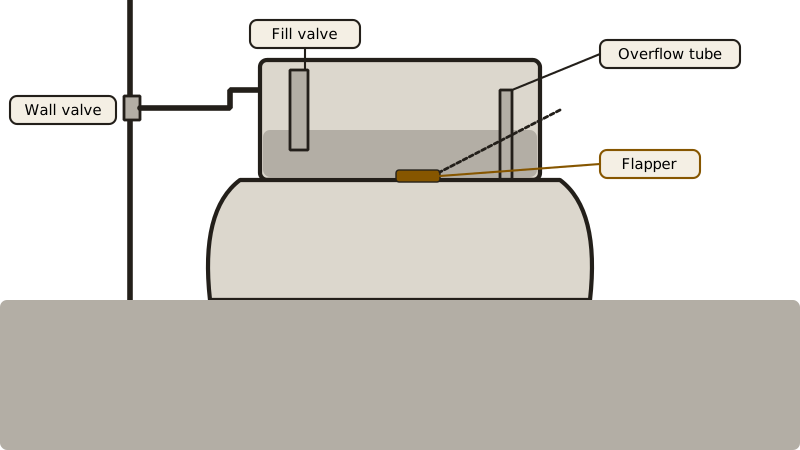
Stand in the bathroom and read the clues. A damp ring around the bowl, a bead of water on the wall valve, a tank that sweats, a bowl that seems to top itself up at 2 a.m.: each says something different. Match yours below, and you will usually buy one cheap part rather than guess at three.
For toilets in general, from clogs to full swaps, the hub is toilet repair. This guide stays on leaks.
What does each toilet leak symptom mean?
Read the table by location. Puddle at floor level: suspect the base seal or its bolts. Bead at the wall: the hose or valve. Wet seam between tank and bowl: tank bolts and gasket. Refill noises but a dry floor: flapper. Any crack in the porcelain: a new toilet.
| What you see | Likely cause | Owner fix? |
|---|---|---|
| Puddle circling the base | Wax seal or loose floor bolts | Snug the bolts; otherwise lift the toilet |
| Drip at wall valve or hose | Hose or valve packing | Yes, new braided hose |
| Wet where tank sits on bowl | Tank bolts or gasket | Doable, messy |
| Water on outside of tank, no drip | Condensation | No repair; just humid air |
| Tank refills now and then, floor dry | Flapper | Yes, cheap |
| Hairline crack in porcelain | Failed fixture | Replace the toilet |
Can a toilet leak with no water on the floor?
It can, and that quiet version is the one that costs money. Here is the dye test. A few drops of any dye go in the tank, and then nobody flushes for ten minutes. Dye showing up in the bowl is proof the flapper leaks. Flush straight away so nothing stains.
EPA guidance says flappers wear out, should be inspected periodically, and need replacing at least every five years. One that has gone bad can bleed thousands of gallons annually. For the repair see flapper repair; stopping a toilet that runs on handles the noises.
What if water collects around the toilet's foot?
Turn the wall valve clockwise until it stops, drain the tank with one flush, and mop. A wax ring seals the bowl to the drain flange, and when it fails the water escapes right at floor level. Try one thing only: tighten the floor bolts gently, a bit at a time, since porcelain cracks under heavy torque.
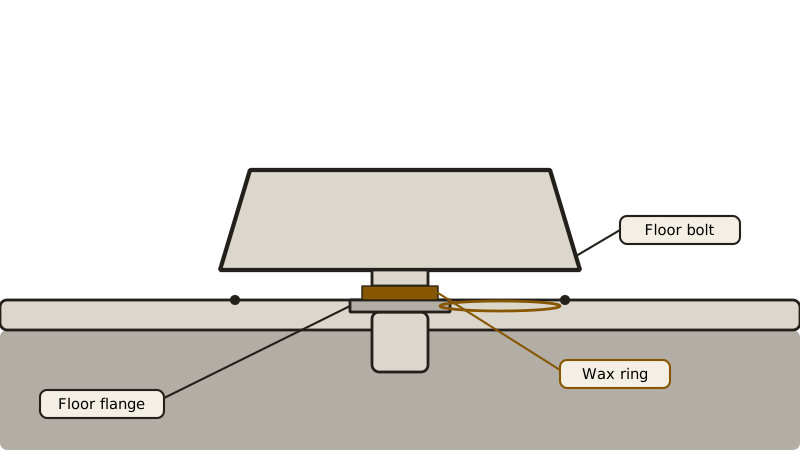
Still wet after that? The toilet must be lifted, the ring renewed, and the flange and floor inspected. Do not let a base leak linger; wood below a toilet can rot out of sight. With an upstairs bathroom, a discolored patch on the ceiling below gives it away; ceiling water leak takes that case.
What stops a drip at the hose or the tank joint?
Supply line first, because it is the easy one. Close the wall valve, undo both ends, fit a new braided hose of matching length, and finish with a small nip of the wrench after hand-tightening. Where tank meets bowl, things get trickier: the bolts and a rubber gasket live beneath the tank, so it has to be lifted off.
A capable owner can do either, with towels at hand and a spare trip to the store in mind. Cracks are the dividing line: porcelain cannot be mended. If that is what you found, what a toilet replacement costs sets out the job.
Could the fill valve be the leak?
A fill valve stuck open pours water down the overflow tube all day. No puddle, but the meter spins. Minerals matter here: CVWD's 2025 report shows total hardness of 109 to 142 ppm, and over the years scale can foul valve seats.
Fill valves are a common owner swap, explained under fixing a toilet fill valve. To test the whole house, check the meter, leave all water-using things alone for 120 minutes, and check it once more. If the dial moved, something leaks. More at why a bill runs high.
What does a leaking toilet cost in water?
The EPA puts the yearly loss for a typical home at more than 9,300 gallons when every fixture is counted. A price per gallon for this area is not in our sources, so we offer no dollar conversion. Compare a billing period before and after the fix; the difference shows up on its own.
A silent flapper leak is among the few that cost money without ever announcing themselves. The dye test costs a few cents.
Which leaks need a plumber business, not a wrench?
Hand these over: a base leak that survives bolt-snugging, a rocking toilet, a cracked fixture, any water that has reached a ceiling or a wall below, or a bathroom where lifting a heavy toilet is not realistic. The plumber resets it, checks the flange and shutoff, and looks for damaged flooring.
In legal terms, a contractor becomes mandatory once the job costs $1,000 or involves a permit. A normal toilet repair stays far under that line. Should damage call for permitted repair, take it up with the city's building department. To book a visit, use request a quote. Leak repair covers wider cases, and you can see the other work we arrange on the home page. Answers to usual questions follow.
Common questions
Is the repair quick?
Flappers, fill valves and supply lines are generally short visits. A new wax ring takes longer, with the bowl lifted off and set back. Rotted flooring adds hours. Time estimates only make sense after the source is confirmed, which is why the symptom table above is worth filling in before calling.
What do I want listed on a toilet repair quote?
Parts by name: ring, bolts, line, flapper or valve. Then who handles floor damage if it appears, and who carries away the old parts. Confirm the contractor's license through the CSLB website before agreeing. One vague line reading "toilet repair" deserves a follow-up question.
Can the toilet stay in use meanwhile?
Not with a base leak: each flush sends water toward the subfloor. A slow flapper leak tolerates a day or two, though it wastes water. Close the valve behind the toilet whenever the house will be empty for a stretch.
Does every leak mean a new toilet?
No. Almost all leaks trace to cheap parts: a flapper, valve, line, ring or bolts. Only a cracked bowl or tank forces a new fixture. Fit the part, retest with dry tissue and the dye test, and leave bigger jobs until later.
Updated