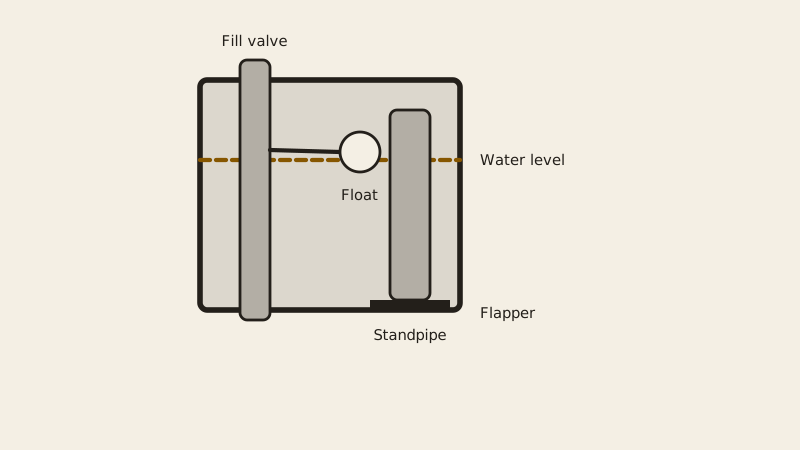
Lean on the bathroom wall during a quiet moment and listen. A thin hiss, a dribble that restarts every few minutes, or a tank that needs ages to fill points at the fill valve, the upright assembly beside the flush lever. Swapping one rates as a gentle plumbing job: an hour, one wrench, a sponge. To skip the work, see the toilet repair page for the plumber route, and the quote request form puts it in motion.
How do you tell a failed fill valve from a leaky flapper?
Look at the tank right after you flush. Suspect the fill valve when hissing carries on after the tank is full, when water dribbles over the rim of the standpipe, when refilling drags, or when the pipes knock as the tank fills. A leaking flapper can imitate several of these, so rule it out too.
Quick sorting guide:
| What you notice | What it usually means |
|---|---|
| Hissing even though the tank is full | A tired seal inside the valve |
| Water running into the standpipe | Float riding high, or valve jammed open |
| Tank tops itself up unprompted | Flapper leak, not the valve |
| Anemic refill | Debris in the valve screen or a half-closed supply stop |
| Knocking while filling | Valve chatter, or high line pressure |
If the level stops a finger under the standpipe's top and the noise ends, the valve closes properly. Still-moving water in a full tank is your verdict.
Can local water wear toilet parts out sooner?
Possibly. The local water district rates its supply moderately hard to hard, so scale can clog a valve's small screen or harden its seal. Heavy pressure shortens valve life too. Pressure at fixtures is capped at 80 psi by CPC 608.2.
No street-level pressure figures were found in official sources, so none are quoted here. If toilets knock as they fill, or several valves failed within a short time, a plumber can read the line pressure and look over any regulator. The pressure regulator adjustment page describes that component.
Rinsing the screen is easy: with water on and the cap lifted, let a short blast carry grit out.
Which situations call for a professional?
Call someone if the stop is corroded shut, the tank is cracked, the hose is brittle with age, the space behind the bowl is cramped, or the symptom returns after a new valve. Contractor licensing is mandatory for permitted work and for jobs totaling $1,000 or more.
A plain fill valve swap sits well beneath that threshold. Even so, a plumber is fast and can add a fresh stop and braided hose in the same visit, which spares you a later emergency.
Before the visit, snap the inside of the tank and any wet spots, note the day the symptom started, and mention whether the water bill rose. Expect to see a written quote first. For everything else we line up, go to the home page.
What do you do when the toilet's water hose splits?
Close the stop behind the toilet, and if it refuses, close the house main without delay. A split braided hose releases water fast, so act first and take pictures after. Mop up, and ring a plumber when the stop is stuck or water seeps from inside the wall.
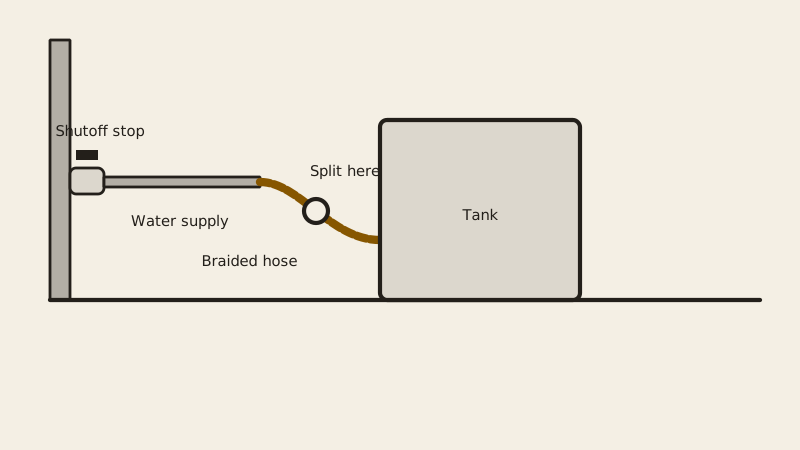
Braided hoses give out near their fittings and tend to do so with no warning. Replace yours whenever you replace the valve, since they cost little. Look for rust, bulging or crusty white deposits at the metal ends.
A failed pipe in the wall or water dripping through the ceiling below counts as an emergency. The article on a burst pipe says what to do.
How can you confirm a leak before buying parts?
Tint the tank water with some food dye, keep hands off the lever for roughly ten minutes, and then inspect the bowl. Tint there convicts the flapper. A clean bowl, with refilling that happens untouched or a hiss, points the finger at the fill valve. Flush afterward so nothing stains.
The dye method is the EPA WaterSense one, and the agency adds that flappers deserve renewal about every five years, as a worn one can waste thousands of gallons without a sound. Since both parts age together, many people renew them in the same sitting.
One more trick before opening anything: lift the float with your fingers. Should the flow stop, the float needs adjusting and the valve itself is fine.
Does a running toilet push your water bill up?
Often, and it is among the quietest causes. A valve or flapper that leaks day and night costs real water, and a typical home, by EPA reckoning, loses upward of 9,300 gallons a year to leaks. Toilets feature often among the sources. The bill gives it away before your ears do.
Cucamonga Valley Water District recommends monthly billing as a way to catch leaks early. The tell is a bill that rises when nobody's habits changed. Other explanations live in the high water bill article.
Try the hour test. Close the supply stop behind the toilet, note the tank level, and come back after an hour. Barely any drop means the flapper seals. A clear drop means water is draining into the bowl, so the flapper is next on the list; flapper repair is covered separately.
When do the flapper and gasket matter?
Replace a flapper that feels sticky, curled or stiff, and look at the seat beneath it. Gaskets and tank bolts misbehave differently, leaving puddles around the base or behind the tank while the toilet stays silent. All of these parts are inexpensive and take minutes to change.
Location tells you the part. Wet floor at the base suggests the wax ring or the seal joining tank and bowl. Water behind the toilet suggests the supply line or stop. A tank that never rests suggests the flapper or fill valve.
Chain slack matters too. Too taut and the flapper never seats; too loose and a loop slides under it. Aim for slack of about half an inch. For drips beyond the tank, read fixing a toilet leak.
What does replacing the fill valve involve?
Sequence: stop the water, empty the tank, free the hose and the big locknut, remove the old valve, position its replacement at the correct height, snug it, reconnect and tune the level. Allow thirty to sixty minutes, a bucket and a few towels.
Here is how it unfolds. The small oval handle behind the bowl is the stop, and it closes clockwise; if it is seized, the house main takes over. Flush, then sponge out the remainder. Spin the coupling nut off beneath the tank, catching drips, and then unscrew the chunky plastic nut that anchors the valve through the tank floor.
The new valve arrives with adjustable height. Set it per its leaflet so the marked critical level clears the top of the standpipe. Slide it into the hole on its rubber washer, hand-turn the locknut, and add only a quarter more with a wrench, because porcelain cracks under force. Hook the hose back up, clip the thin refill tube onto the standpipe, open the water slowly, and adjust the float until the level halts about an inch below the standpipe's top.
Flush three times while watching both connections. A photo of the old valve before shopping saves a return trip, although universal models fit most tanks.
Common questions
When should the fill valve be changed?
No fixed timetable exists. Most run for years and are replaced once they hiss, stick, refill slowly or leak. The EPA says flappers should go at least every five years, and since both parts see the same water, owners often renew the pair together.
What if it keeps running even with a new valve?
Most often the float sits too high and water slops into the standpipe, or the flapper leaks, or the refill hose sits inside the tube below the waterline. Lower the float, repeat the dye check on the flapper, and clip the hose above the water level.
Will a running toilet really add much to the bill?
It can. A stuck valve works day and night, which is how leaks reach the volumes the EPA describes. Look at the past few bills, then use the dye and supply-stop checks above to find out if the toilet is responsible.
Can I safely swap the valve on my own?
For most households, yes. No gas, electricity or permit is involved, just water and a wrench. The hazards are over-tightening and cracking the tank, or forcing a stuck stop valve. When the stop will not budge, set the wrench aside and book help.
How are the flapper, gasket and fill valve connected?
Each handles one task. The flapper holds water in, the valve refills, and the gasket seals tank to bowl. When one fails the others compensate or the toilet runs. Inspecting all three in one visit tends to prevent a second repair.
Updated