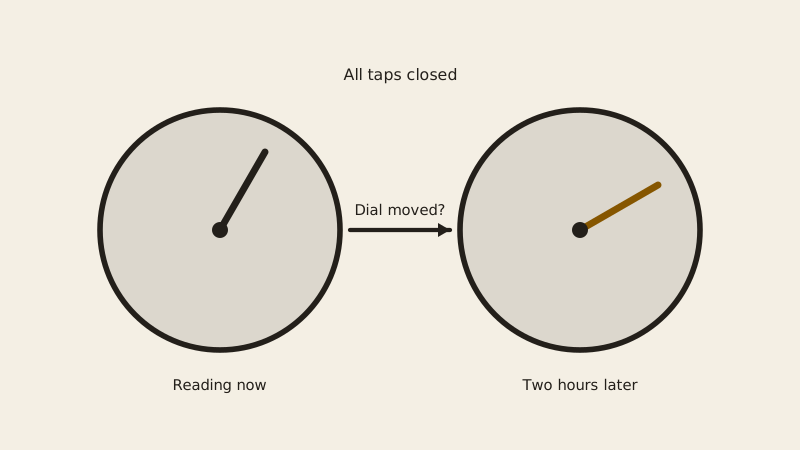
A larger bill has only three possible explanations: more water went through the meter because you used it, because something leaked, or because the bill is mistaken. The meter settles the matter in about two hours. When the answer turns out to be a leak, the Cucamonga Peak Plumbing home page shows the repair work we set up, and the sections below take the checks in a sensible order.
Where do you start when the bill jumps?
Begin with the paper, not the pipes. Check how many days the billing period covered, what the usage figure says and how earlier months compare. A longer cycle, an estimated reading or a change in watering can account for it. If the usage number is up and nothing changed at home, go to the meter.
Pick a quiet stretch of the day and note the dial. Then leave faucets, appliances and sprinklers untouched for two hours before reading it again. The EPA's guidance: a changed reading probably means a leak. The meter sits at the edge of your property, so a dial that turned means the loss is somewhere on your side.
Are toilets the usual hidden culprit?
Frequently, yes. A toilet that dribbles into the bowl can lose water day and night without making a sound you would notice. Tint the tank water, leave the lever alone, and watch the bowl. If tint arrives within ten minutes, a part inside the tank (flapper or fill valve) is letting water slip past.
The EPA reckons leaks in an average home add up past 9,300 gallons annually, and mending the easy ones can shave about a tenth off the bill. Two pages here walk through the common fixes: toilet flapper repair and replacing a fill valve.
Could a pipe or slab be leaking?
Certainly. A pinhole in copper, a joint that has let go inside a wall, or a break beneath the slab can keep the dial moving even when every tap is closed. Tell-tale clues: damp patches, a floor warm to the touch, a musty smell, running water audible in a quiet house, and consumption creeping upward while your routine stays put.
Say the toilets pass and the dial still turns. Shut the main valve and check once more. A dial that stops means the leak is inside the house; a dial that keeps running means the underground pipe linking meter and house. For typical prices, see slab leak repair costs.
Why did my bill spike in winter or only this month?
Winter bills are normally the lowest of the year, so a leak stands out. EPA suggests pulling a cold-weather month, January or February, and judging it: for a family of four, monthly use above 12,000 gallons can signal serious leaks.
Isolated spikes have blander explanations: a longer billing cycle, an estimate later corrected, a freshly filled pool, or sprinklers left running after rain. Last year's same month is the fairest benchmark. If the figure stays extremely high with no explanation, ask the supplier to verify the reading.
Who sends the bill, and who answers questions about it?
The city's own utility list names Cucamonga Valley Water District as the water provider for Rancho Cucamonga, and the district's website gives 855-654-2893. A sliver near Etiwanda Avenue may belong to Fontana Water Company, and some Upland addresses are on the City of Upland or another supplier. Your bill names the supplier.
Whoever it is can review the read, test the meter and describe any leak-adjustment policy. Do not assume such a policy exists; ask. Near a service boundary, your address may sit in a different system from the neighbor's, which is another reason to read the bill.
Can pressure or a banging pipe push the bill up?
Pressure does not bill you directly, but it strains joints, and leaks, running toilets and weeping faucets tend to follow, each one quietly adding to usage. Fixtures are capped at 80 psi under CPC 608.2; once a regulator quits, pressure can climb well beyond.
A bang as a valve snaps shut is often the first hint of a pressure or pipe-support problem. The water hammer guide lists likely causes. Pressure testing takes a gauge on the hose spigot and a few minutes, and the regulator replacement cost page describes what a fix involves.
What about sprinklers, pools and cooling equipment?
Irrigation is a quiet culprit across Inland Empire yards. One cracked head, a sticking valve, or a timer that waters through rainstorms can outspend the whole interior of the house. Walk the lawn while the system runs, looking for geysers, ponding and soggy ground.
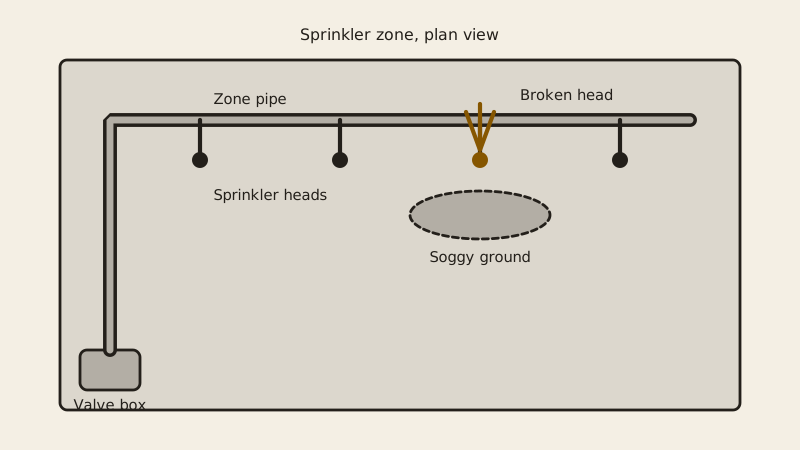
Pools lose water through evaporation and top-up valves. Equipment fed by the water line deserves a glance too: ask an air conditioning contractor whether any cooling gear, humidifier or similar unit draws from it. Treatment equipment with a drain, a softener for instance, can run on when a valve sticks.
Which signs mean calling someone in?
Ring someone when the dial moves with everything off and you cannot find the source, when walls or ceilings look damp, or when a shutoff will not close. Locate your main shutoff before an emergency and close it first to limit damage. A stuck valve deserves same-day attention.
Gas or electricity near water raises the stakes. Smelling gas? Get everyone out and, from outside, reach SoCalGas (1-800-427-2200). If anybody is in danger, 911 comes first. As a separate rule, never trace a wet wall toward an outlet. Ordinary leaks get a written quote from a contractor, and you can use the quote form to have us arrange it.
Common questions
What explains a sudden jump?
Mostly a leak, an irrigation change or a longer billing period. Take the two-hour meter reading first: movement with everything off confirms a leak, while no movement shifts attention to the billing dates and whether the read was estimated. Toilets top the list of hidden culprits.
If there is a leak, is the bill still mine to pay?
The bill follows what passed through the meter, so expect to be charged. Some utilities run adjustment programs for proven leaks, though we cannot say what applies to your account. Ask the supplier named on the bill before paying, and keep the repair invoice.
Might the water heater be responsible?
A leaking tank or relief valve can add to usage, and a heater cycling more often raises the gas bill. Look for a wet floor, rust at fittings or a dripping discharge line. The relief valve replacement page shows what a plumber checks.
Does hard water raise the bill?
Not the water charge itself. Scale makes heaters work harder and can shorten fixture life, but it builds over years, not in a single month. The district describes local water as moderately hard. A one-month spike points to a leak, not hardness.
Could the bill simply be wrong?
Possibly. Match the meter number shown on the bill to the one stamped on the meter, then read the dial yourself. If your reading matches the bill, the usage is real. If not, ask the supplier for a re-read, and photograph the dial with the date visible.
Updated