Inside the tank, low down, a rubber disc decides whether your toilet wastes water. Replacing it is quicker than brewing coffee on many models. We keep this guide under the broader toilet repair heading. It covers confirming the fault, matching the part, fitting it, and spotting faults that imitate it. If the leak outlasts the new part, ask for a plumber at request-a-quote.
What proves the flapper is leaking?
Squeeze coloring from the kitchen into the tank. Do not flush; check the bowl in ten minutes. Color showing in the bowl proves the stopper or its seat is leaking, and EPA describes this very test. Other clues: a toilet that refills with nobody near it, or a faint hiss between uses.
Other checks that sort suspects from innocents:
- Hand test. Close the supply, let the tank sink low, and press the disc onto its seat. If the seepage stops, the stopper is the likely culprit.
- Rubber check. Slimy, tacky, curled or cracked rubber has had its day. EPA wants flappers renewed on a five-year clock at the latest.
- Refill rhythm. Short top-up bursts every few minutes mean water is escaping past a bad seal.
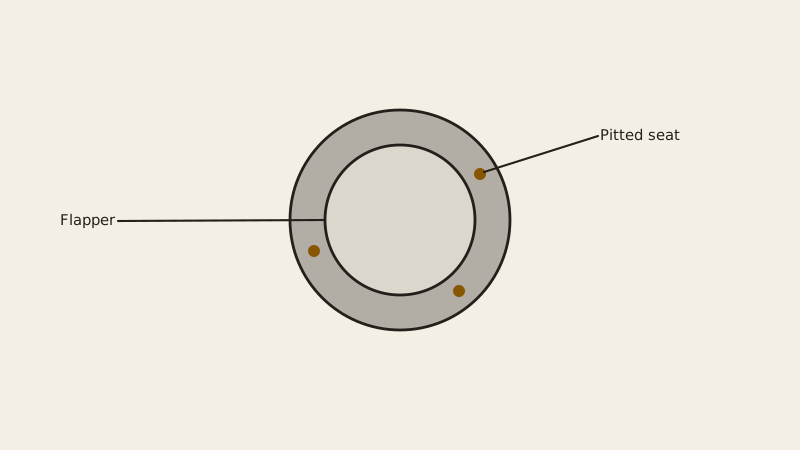
Even a healthy-looking flapper leaks over a dirty or pitted seat. Rancho Cucamonga tap water leaves a mineral film: the Cucamonga Valley Water District 2025 analyses show hardness between 109 and 142 ppm. Run a damp rag around the seat before you blame the rubber.
What types of flapper are there, and which one fits?
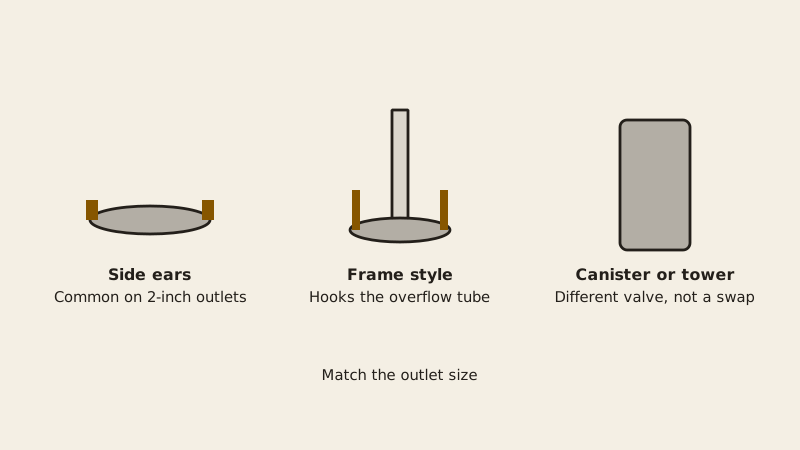
Match by outlet diameter and by how the part attaches. Most tank outlets measure 2 or 3 inches across. Some makers ship their own proprietary shapes, while adjustable universal models cover many (not all) toilets. A flapper with the wrong size lets water creep past or snaps shut too early and weakens the flush.
| Style | Notes |
|---|---|
| Plain rubber with side ears | Common replacement on older 2-inch toilets |
| Frame style | A plastic frame hooks onto both sides of the overflow tube |
| Adjustable float flapper | A small float controls how long it stays up |
| Canister or tower | A different flush valve altogether, not a swap |
| Maker-specific | Shaped for one brand's valve |
Holding the old stopper beside the candidates usually settles it. The brand and model tend to be molded into the porcelain inside the tank or printed beneath the lid. If nothing fits, a complete flush valve kit replaces both the flapper and its seat in one go.
What is the fitting procedure?
Close the wall valve, then keep flushing till the tank empties. Then detach the chain and lift the old disc away. Clip the new disc in just as the old one sat, then reconnect the chain leaving a little give. Reopen the valve and dye-test. Plan on 10 to 20 minutes.
In order:
- Rotate the wall valve clockwise until it is shut.
- Flush and hold the lever to drain the tank, then sponge out the dregs to expose the seat.
- Unclip the chain from the lever arm. Slip the side ears off the little pegs on the tube, or lift away the collar if yours has one.
- Rub the seat with a soft rag. Never scrape, because scratches leak.
- Seat the new ears on the pegs. Hook the chain onto the lever with a finger-width of play.
- Open the valve in stages. Let the tank fill, flush twice and watch the rim of the seat.
- Repeat the dye test for ten minutes.
Most do-it-yourself failures trace to the chain. A short one props the disc open; a long one folds beneath it. Move to another link or trim the excess until the flapper drops shut by itself.
Still running with a new flapper: what else is wrong?
Work through the seat, chain, fill valve and water level. A scored seat will not seal. A snagged chain props the stopper up. A worn fill valve never stops feeding the tank, and a level above the standpipe spills into it. One fix is often enough, though two faults can overlap.
Telling them apart:
- Water trickling into the standpipe. Check whether the level is high or the valve keeps passing water. See fill valve repair.
- Disc hangs open after a flush. Chain trouble, or an adjustable float set too long.
- Dye still gets through. The seat is damaged; a repair ring or a new flush valve sorts it.
- Hissing but no dye. Back to the fill valve.
The full list of running-toilet causes lives in toilet keeps running, and the running toilet overview comes at it from another side.
Is it worth fixing a mildly leaking flapper?
Yes. EPA's tally is over 9,300 gallons lost per home yearly, and notes that one failing flapper might account for thousands of gallons without a whisper. A few dollars of rubber reverses that, which usually pays for itself within a billing period or two.
A silent leak shows on the water bill first. If the total jumped for no clear reason, dye-test each toilet, then widen the hunt with other reasons a bill climbs.
What would the visit cost?
One national price guide gives $75 to $150 for a plumber's flapper job and a little more for a fill valve, with evenings and weekends commonly adding $75 to $200 and parts on top. The part from a hardware store costs far less than the visit, since labor and call-out drive the charge.
Read these as guide numbers from published data. Regional labor can shift them by roughly a fifth, so the real price is whatever a local plumber writes on the quote. Because a single flapper job is mostly call-out time, it pays to line up other small bathroom tasks for the same visit.
With a cracked bowl or an ancient toilet, look at a full replacement before spending on repairs.
Which signs mean a professional should take over?
Book one if the leak outlives a new disc and a cleaned seat, the shutoff on the wall is seized, the flush valve itself is cracked or corroded, or water reaches the floor. A plumber can also tell whether a partial clog, the kind a drain rooter or auger clears, explains a weak flush.
Across Rancho Cucamonga, Upland and the foothill streets, we can arrange a visit from a local plumber. Bigger jobs and anything permitted fall under California's contractor-license rules, and the CSLB website can verify a name. The home page points to the other services we cover.
Common questions
How many years will a flapper last?
EPA's ceiling is five years. Hard water, slime, curling edges or a positive dye test shorten that interval. With the part so cheap, many homeowners swap it whenever the tank lid happens to be off for another reason, whether or not it has failed yet.
Will a flapper from another brand work?
Often, if the outlet size, mounting style and seat shape agree. A universal adjustable model suits many 2-inch outlets. Some makers use their own shapes, and a poor match leaks or drops early. Compare old and new in your hand at the store.
Can in-tank cleaning tablets damage the flapper?
Many manufacturers advise against dropping bleach or cleaning tablets into the tank because harsh chemicals can attack rubber. Read your own toilet's instructions for the final word. If the disc feels soft or tacky, stop using tank cleaners and scrub the bowl directly.
Should the fill valve be replaced together with the flapper?
Consider it when the fill valve is old, hissing or sticking, since both parts age at a similar rate. Doing both saves a second shopping trip and possibly a second visit. A valve that works properly, with no hiss or sticking, can stay put.
Updated