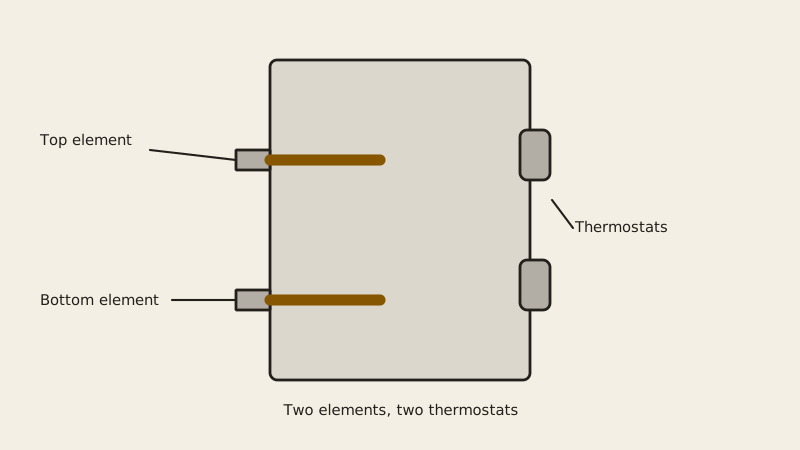
Inside an electric tank heater, the heat comes from metal rods screwed through the tank wall and hidden behind small panels. Those are the elements. One that burns out leaves the water lukewarm or short-lived, and a new one brings the heater back. Gas models have no such part. Unsure what you own or what failed? Start on the water heater repair page; the home page covers how booking works.
Is a burned-out element really the culprit?
Think element when an electric unit goes lukewarm, empties faster than it once did, or delivers nothing though the breaker is on. Most tanks carry a top and a bottom element, and each can die alone. With one gone you typically keep some hot water, only less of it.
Timing hints at which. Hot at first, then suddenly cold, points to the bottom element. Nothing hot whatsoever suggests the top element or the thermostat wired to it. A tripped reset button and a failed thermostat feel identical in the shower, so only a meter reading on the element settles it.
Scale is a frequent cause here. For its 2025 report the Cucamonga Valley Water District logged total hardness between 109 and 142 ppm, a range the district's own wording calls moderately hard to hard. Minerals crust a submerged element, and a crusted one cooks itself.
Dismiss the simple causes using the no hot water checklist before buying parts.
Which cases belong to a plumber?
Anything involving doubt about 240-volt wiring, a leaking tank, a stuck element, a breaker that trips after the swap, or rust-colored water. One visit can test both elements, both thermostats and the wiring, and say whether the tank deserves saving.
Booking is our part. The work belongs to a local plumber, who commits to a price in writing beforehand. Describe the symptom, brand, age and breaker behavior in the quote form. Standing water around the tank is an emergency, so go to the emergency water heater page instead.
Power plus water is a lethal mix. Never touch terminals live or work while standing in a puddle. Hot water also scalds, and the federal guide behind those lifespan numbers names 120 degrees Fahrenheit as a thermostat setting safe for most people.
What does swapping an element involve, and is it a home project?
For a confident handler, yes, though it puts 240-volt power next to a tank of scalding water. Kill the breaker, prove the wires dead with a tester, and empty the tank below the element before touching the thread. An element energized while still in air ruins itself within seconds. Any doubt, and the plumber should take over.
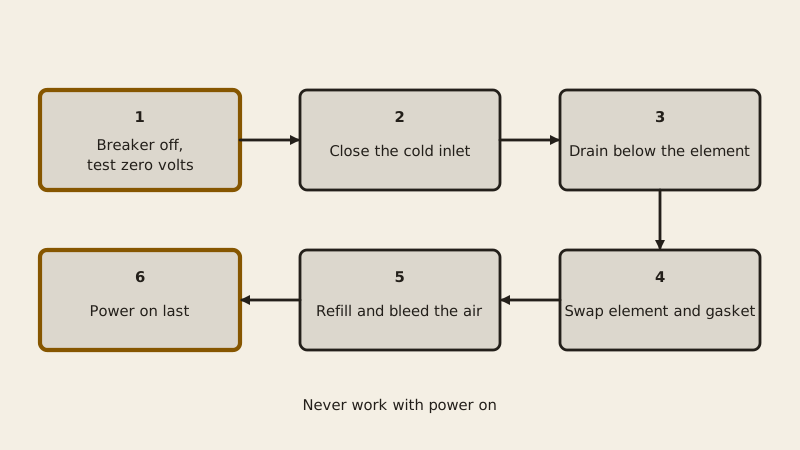
Order of work:
- Breaker off, then a tester on the terminals to confirm zero volts.
- Close the cold inlet and leave a hot faucet open indoors.
- Open the side panel, push aside the insulation, lift off the plastic shield.
- Run a hose to a safe drain spot and empty the tank past the element. That water is hot.
- Note which wire goes where, pull them, and unscrew the old element using a purpose-made socket.
- Fit the new element with a new gasket, tighten it, reconnect the wires.
- Close the drain and reopen the inlet. Keep the hot faucet running until the air stops sputtering out.
- Switch the power on last.
A seized element or chewed threads mean stop. Brute force can crack the tank opening, and then a small repair has become a new-heater purchase.
When does a new element not rescue the heater?
With a tank at the tail of its life, a fresh element only postpones the day. Federal energy guidance gives storage heaters a ten-to-fifteen-year run. An element does nothing about corrosion inside, a spent anode rod, or sediment packed solid across the bottom.
Warning signs that point at the tank itself:
- Moisture or rust streaks around the base.
- Cloudy or brown hot water.
- Rumbling and popping.
- Repair after repair on a tank that is already old.
Then weigh the fix against a swap using the replacement cost guide. A 2026 plumbing-company survey shows electric tank replacement installed in a band from roughly $1,200 up to $3,000. No source we checked prices an element alone, so that number has to come from a written quote.
While the access panel is off, think about the anode rod, which the anode rod page explains.
Which element fits my heater?
Three things have to agree with the old part's stamp and the rating plate: voltage, wattage and mounting style. Many residential tanks take a threaded screw-in type; others use a bolted flange. A different voltage will not work, and the wrong wattage either overloads the circuit or leaves the water tepid.
Take pictures of the plate and the old element's end before heading to the store. A replacement that dies within months is a clue that something else is wrong: scale, a failing thermostat, or a dry-fired element.
When the heater has some years on it, buy the thermostat with the element, since both age together. In hard water, a lower-wattage-density element is a popular choice because it runs cooler and collects less scale. Ask the plumber whether it suits your model.
Common questions
How long until hot water returns?
Hands-on time is short for someone practiced, but draining, refilling and reheating stretch it, so allow a couple of hours before showers resume. A plumber's visit adds diagnosis and travel. After the tank is full again it needs a while to heat.
What belongs on the estimate?
Confirm the element itself is included, whether both elements and thermostats get tested, how a rusted tank or worn anode would change the plan, and what is charged if the element was not the cause. Get the number in writing first.
Must I be home?
Yes. An adult opens up, points out the heater and approves the cost. Water and power are off for stretches of the visit, so shift showers and laundry to another time, and give the plumber clear access to the tank.
Why did my new element fail so soon?
Usual suspects: scale, a thermostat that lets the element overheat, power applied before the tank was full, or a voltage or wattage mismatch. Hard water speeds the scaling. If it fails twice, have the thermostats and tank inspected rather than buying a third.
Updated